Torque vs Cadence Sensors: Which eBike Feels Right?
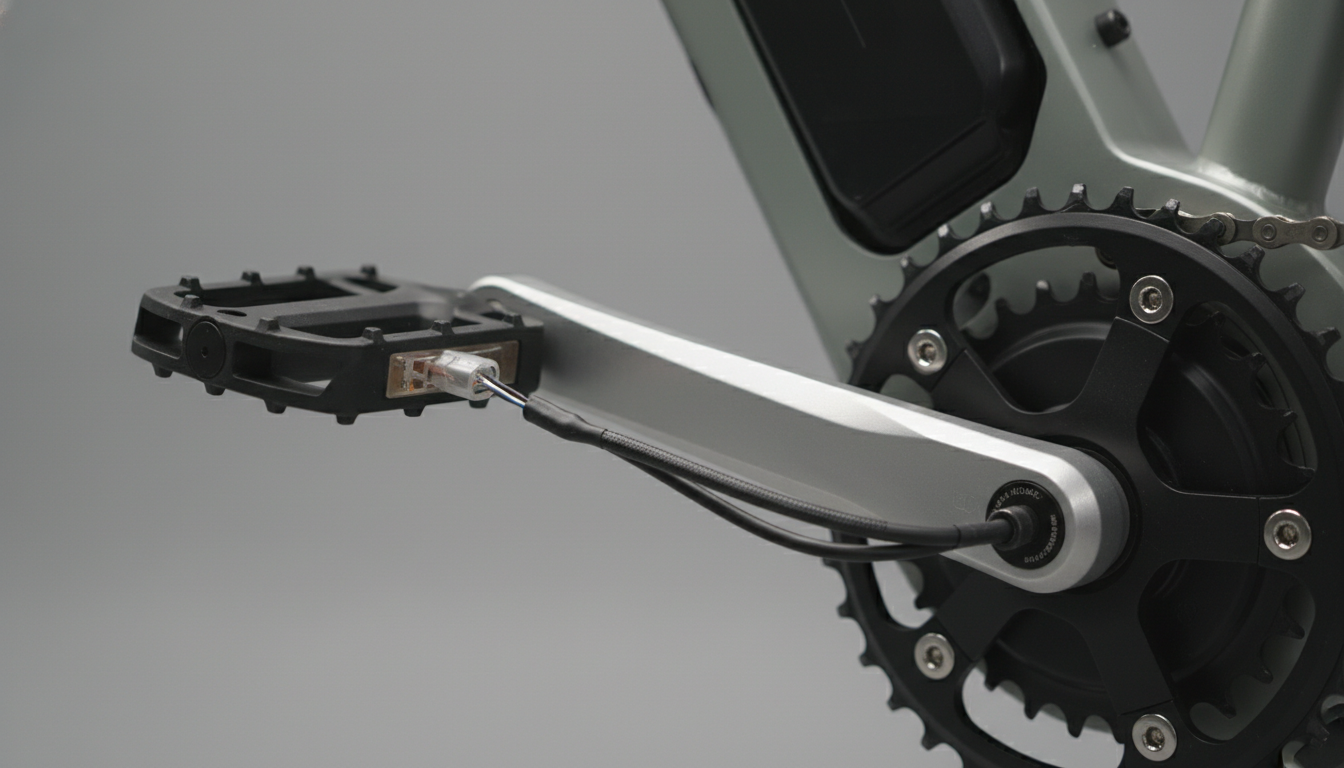
Choosing between a torque sensor and a cadence sensor is the single biggest factor in how natural your ebike feels under your feet. Get it right and the motor disappears into the ride. Get it wrong and you’ll fight the bike on every pedal stroke.
How Each Sensor Actually Works
A cadence sensor detects whether you’re pedaling — full stop. It uses a ring of magnets on the crank and a hall-effect sensor on the frame. The moment magnets pass the sensor, the motor fires at whatever assist level you’ve selected. It doesn’t care how hard you’re pushing, only that your legs are moving.
A torque sensor measures the actual force you apply to the pedals, typically via a strain gauge built into the bottom bracket or crank spider. The motor output scales in real time with your effort. Push harder, get more assist. Ease off, the motor backs down immediately.
The mechanical difference is small. The riding difference is enormous.
What Each One Feels Like to Ride
Cadence sensors create a noticeable surge when you start pedaling. There’s a brief lag — usually 180° to 360° of crank rotation — while the magnet ring completes a pass, then the motor kicks in with a fixed dose of power. At low speeds this feels jerky. At high speeds on flat ground it smooths out considerably, which is why cadence sensors remain popular on commuter and leisure bikes where riders want easy, consistent assistance without thinking about it.
Torque sensors feel closer to a regular bike with a tailwind. The assist builds proportionally, so the harder you sprint, the stronger the push. This makes climbing feel intuitive — you lean in, the motor leans in with you. It also means better efficiency, because the motor isn’t running at full tilt every time your foot twitches.
The tradeoff: torque sensors demand that you actually pedal with some effort. If you want to soft-pedal at low resistance and still get full assist, a cadence setup is more forgiving.
Where You’ll Find Each Type
Cadence sensors dominate the budget and mid-range market:
- Most bikes under $1,500 use cadence-only systems
- Common on hub-motor bikes from brands like Rad Power, Lectric, and Aventon’s entry models
- Easy to retrofit; aftermarket kits run $15–$60
Torque sensors appear on mid-drives and premium hub setups:
- Bosch, Shimano STEPS, Yamaha, and Specialized’s SL motors all use torque sensing as a core feature
- Brose and Fazua systems are torque-only
- Most bikes with torque sensors start around $2,000; Specialized Turbo Levo SL and Trek Rail use them at the higher end
- Some brands — Giant, Trek, Specialized — now include torque sensors on mid-range models around $2,500–$3,500
A few systems combine both signals. Bosch’s Performance Line and CX motors read cadence and torque together, then blend the outputs for smoother response across a wider RPM range. This is the current benchmark for natural-feeling assist.
Which One Matches Your Riding
Choose a cadence sensor if:
- You’re riding flat terrain, bike paths, or casual urban routes
- You want a lower price point and simpler maintenance
- You prefer consistent assist without varying your pedal force
- You’re building a budget commuter or cargo hauler where feel matters less than reliability
Choose a torque sensor if:
- You ride varied terrain, hills, or trails
- You want the bike to feel like an extension of your effort, not a separate machine
- You care about battery efficiency — torque-sensing systems generally extract more range per charge because they don’t overshoot assist
- You’re coming from a conventional road or mountain bike and want the transition to feel natural
One thing worth knowing: torque sensors require a bit more pedaling technique. Stomping with high force at low cadence will produce strong assist, but smooth, efficient pedaling at moderate force is what these systems are optimized for. Riders used to spinning at 90+ RPM on road bikes tend to love them immediately.
Maintenance and Reliability Considerations
Cadence sensor rings and hall-effect sensors are nearly bulletproof. The magnet ring can shift if the mounting screw loosens, and occasional realignment is the worst you’ll deal with. Replacement parts are cheap and universally available.
Torque sensors are more complex. The strain gauges inside are sealed and rarely fail on quality systems, but they can drift out of calibration — especially on bikes that see heavy use or temperature swings. Bosch and Shimano torque sensors are generally well-sealed and reliable over tens of thousands of kilometers. Third-party torque-sensing bottom brackets (common on converted bikes) are more variable in quality.
If you’re building a DIY ebike, cadence sensors are easier to integrate cleanly. Torque-sensing conversions using units like the THUN X-Cell RT are possible but add cost and complexity.
Bottom Line
For relaxed, low-effort riding on flat ground, a cadence sensor does the job without adding cost. For anything involving hills, trail riding, or a natural road-bike feel, a torque sensor is worth the premium — and a dual-sensing system like Bosch Performance Line is the best of both. Match the sensor to how you actually ride, not how you imagine you will.