Torque vs Cadence Sensors on E-Bikes: Which One Wins?
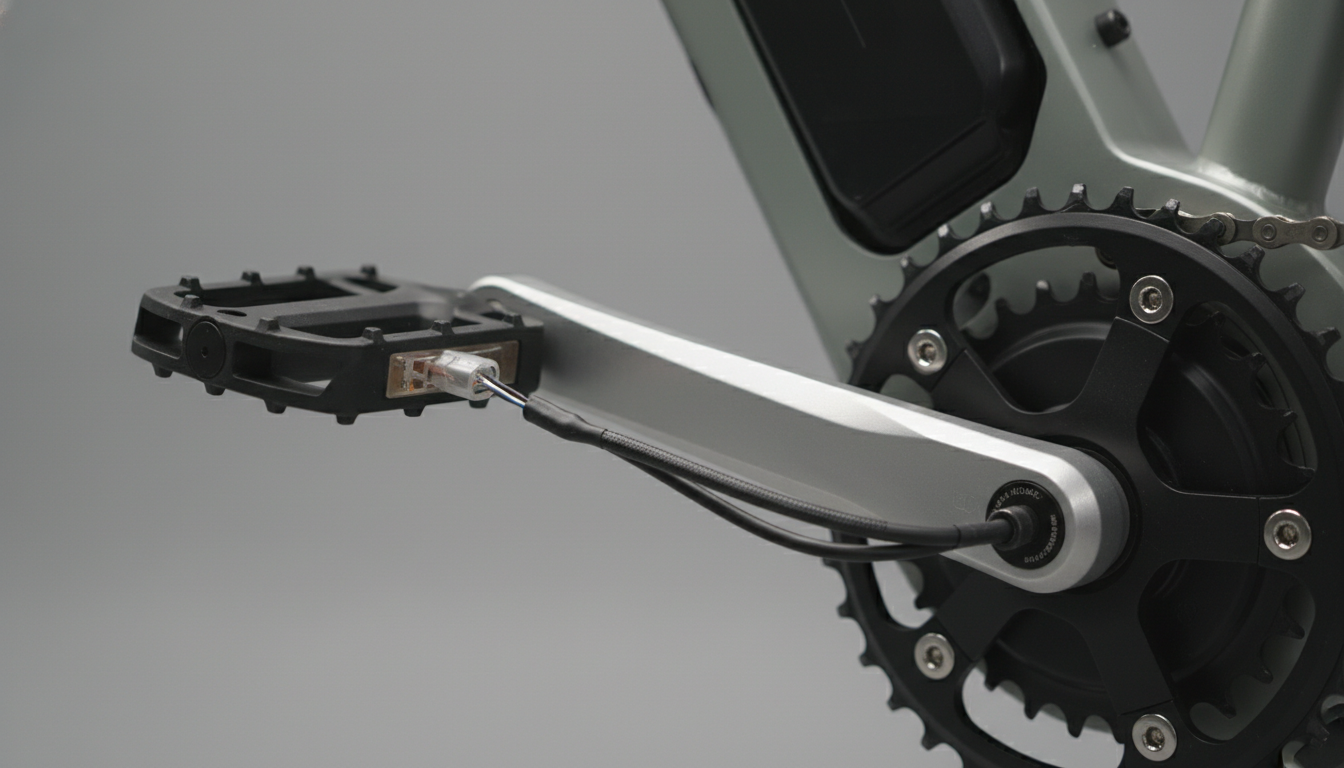
The sensor inside your e-bike’s motor is the single biggest factor in how the bike feels to ride — more than motor brand, more than battery capacity. Torque sensors and cadence sensors work on completely different principles, and choosing the wrong one will leave you frustrated on every ride.
Here’s the short version: torque sensors feel natural and responsive; cadence sensors are simpler and cheaper. The right choice depends on how you ride and what you’re willing to spend.
How Each Sensor Actually Works
A cadence sensor detects whether you’re pedaling or not. It uses a ring of magnets on the crank — typically 8 to 12 — and a reed switch or Hall-effect sensor on the frame. When it detects rotation, it tells the motor to deliver a set percentage of power based on your selected assist level. It doesn’t know how hard you’re pushing; it just knows the cranks are spinning.
A torque sensor measures the actual force you’re applying to the pedals, usually by detecting minute flex in the bottom bracket spindle or chainstay. The motor output scales proportionally — push harder, get more help. Let up, and the assist backs off immediately. It’s measuring effort in real time, typically at 1,000 samples per second on quality systems like Bosch and Shimano.
The Ride Feel Difference Is Massive
On a cadence sensor bike, there’s a lag — usually half a pedal stroke to a full revolution — before the motor kicks in. Then it delivers a fixed surge of power regardless of terrain. On flat ground this is fine. On technical singletrack or a steep kicker, it feels jerky and unpredictable. Stopping and restarting in traffic gets annoying fast.
Torque sensors deliver power in proportion to your input, which means the bike responds like an extension of your legs. The Bosch Performance Line CX motor, used on many mid-drive trail bikes, is the benchmark here — the transition between pedaling effort and motor output is nearly seamless. Experienced riders often describe torque-sensor bikes as feeling like riding a really good conventional bike, just with stronger legs.
Where Cadence Sensors Make Sense
Cadence sensors dominate the budget end of the market for good reason: they’re cheap to manufacture and simple to maintain. You’ll find them on most entry-level city and commuter bikes priced under $1,500.
If the riding is flat, predictable, and low-intensity — think bike path commutes, leisure rides, flat rail trails — the surge and lag won’t bother you much. The Ancheer 26” Electric Mountain Bike is a classic cadence-sensor entry point: basic, affordable, and fine for casual use. For riders who just want motor assist without thinking about it, cadence works.
The other genuine advantage: cadence sensors are nearly immune to battery drain. Because they deliver consistent power chunks rather than constantly recalculating, they put slightly less computational demand on the system — though in practice the difference in range is small.
When You Need a Torque Sensor
For anything beyond flat, casual riding, torque sensing earns its premium. Off-road riding requires precise, predictable power delivery — a cadence sensor’s delayed surge can break traction on loose surfaces or throw your weight backward on climbs.
Fitness-oriented riders benefit even more. A torque sensor means you actually have to pedal to get full assist. It keeps your heart rate in a working zone and your legs doing real work. On a cadence sensor bike, you can spin the cranks lightly and get maximum assist — great for laziness, bad for fitness.
Bikes running the Shimano EP8 or Specialized Turbo Levo motor both use torque sensing and represent what responsive mid-drive assist should feel like. The Fazua Ride 60 is worth a look for weight-conscious riders who want torque sensing in a lighter, less intrusive package.
What the Specs Don’t Tell You
Sensor quality varies even within each type. A cheap torque sensor with a slow sampling rate will still feel sluggish. Some budget mid-drives claim torque sensing but combine it with cadence data in ways that blunt the responsiveness.
When evaluating a bike, ask specifically: what is the torque sensor sampling rate? Bosch quotes 1,000 times per second. Brose and Shimano are in the same range. Anything significantly below that will have noticeable lag even with torque sensing.
Hub-drive motors almost always use cadence sensors, simply because integrating a torque sensor into a hub is mechanically complex and expensive. If torque sensing matters to you, you’re essentially committing to a mid-drive motor.
Bottom line: If budget is the constraint, cadence sensing is fine for flat commuting. For anything technical, hilly, or fitness-focused — spend more and get a torque sensor. The ride quality gap is not subtle.
Where to buy
- Bosch Performance Line CX
- Shimano EP8
- Specialized Turbo Levo
- Fazua Ride 60
- Ancheer 26” Electric Mountain Bike