Electric Bikes vs Electric Motorcycles: Which One Is Right for You?
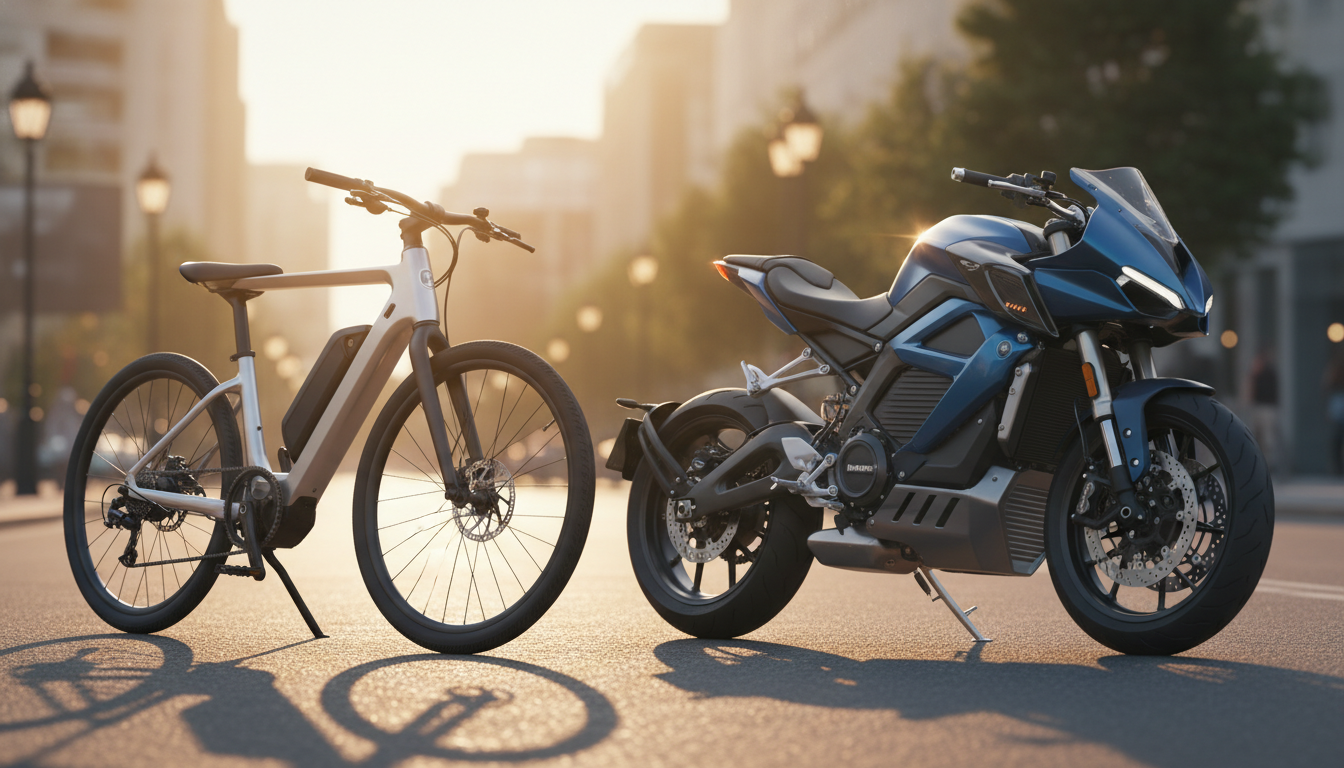
Speed, licensing, cost, and commute distance — these four factors separate the right choice from the wrong one. E-bikes and electric motorcycles look similar in photos but operate in completely different legal and practical universes.
They’re Not the Same Category
An e-bike is a bicycle with a motor assist. In the US, a Class 3 e-bike tops out at 28 mph with the motor helping. You ride in bike lanes (where permitted), don’t need a license, and park at a bike rack. The Specialized Turbo Vado SL is a good example — lightweight, fast for a pedal-assist bike, but capped by federal classification rules.
An electric motorcycle is a motor vehicle. The Zero SR/F does 0–60 in under 3.5 seconds and tops out over 100 mph. It requires a motorcycle endorsement, registration, insurance, and rides in traffic lanes. It’s a motorcycle that happens to run on a battery.
Speed and Range: The Honest Numbers
E-bikes max out at 28 mph (Class 3) under motor power, though you can pedal past that. Range on a quality mid-drive e-bike — say, a Bosch Performance Line CX-equipped model — runs 40–80 miles depending on assist level and terrain.
Electric motorcycles cover far more ground. The Zero DSR/X carries a 17.3 kWh battery and gets 150+ miles of city range. Energica and LiveWire models push similar numbers. Highway range drops significantly on both platforms — but motorcycles handle sustained 70 mph speeds that would be illegal and impractical on an e-bike.
If your commute is under 20 miles each way and includes bike infrastructure, an e-bike wins on flexibility. If you’re riding 40+ miles on open roads, an electric motorcycle is the only realistic option.
Cost: Purchase Price and Ongoing Expenses
This gap is real and matters for most buyers.
- Quality e-bikes: $3,000–$8,000 (Specialized, Trek, Riese & Müller)
- Electric motorcycles: $11,000–$30,000+ (Zero, Energica, Harley-Davidson LiveWire)
- Insurance: Near zero for e-bikes; $500–$1,500/year for electric motorcycles
- Registration/licensing: None for e-bikes; standard motorcycle process for motos
- Charging: Both are cheap — roughly $0.50–$2.00 per full charge depending on battery size
The Riese & Müller Supercharger sits at the premium end of e-bikes near $7,000. A base Zero S starts around $11,000 and climbs fast with accessories. The total cost of ownership gap widens when you factor in insurance and licensing over three to five years.
Licensing, Regulations, and Where You Can Ride
This is the deciding factor for a lot of people and it rarely gets enough attention.
E-bikes (Class 1, 2, and 3 in the US) require no license, no registration, and no insurance in most states. They’re allowed on multi-use paths, many bike lanes, and public roads. Age minimums vary by state but are generally low.
Electric motorcycles fall under the same rules as gas motorcycles: you need a valid motorcycle endorsement (M1/M2), your state’s registration and title process, liability insurance at minimum, and a helmet in most states. Lane splitting rules, HOV access, and highway minimums all apply the same way they do for any motorcycle.
If you don’t have a motorcycle license and don’t want one, the choice is already made.
Fitness, Cargo, and Practical Everyday Use
E-bikes keep you physically active. Even on a high-assist setting you’re still turning pedals, which matters for people using it as part of a fitness or commute-replacement strategy. They fit in elevators, store in apartments, accept panniers and cargo racks without much hassle. The Tern GSD S10 can carry two kids and groceries.
Electric motorcycles offer none of that incidental fitness benefit but compensate with serious carrying capacity via cases and bags, much higher sustained speeds, and the ability to merge into fast-moving traffic safely. For longer commutes on mixed urban/highway routes, a motorcycle is simply safer at speed than an e-bike trying to keep up.
Parking favors e-bikes heavily in dense cities. Locking a $3,500 e-bike to a rack beats circling for a motorcycle spot or paying for a garage.
Who Should Buy Which
Buy an e-bike if:
- Your commute is under 25 miles each way
- You want to skip licensing and insurance overhead
- You ride in a city with decent bike infrastructure
- Physical activity is part of the goal
- Budget is under $8,000
Buy an electric motorcycle if:
- You regularly ride 40+ miles, including highway
- You already have or want a motorcycle license
- Speed and traffic integration matter more than bike-lane access
- You’re replacing a gas motorcycle, not a bicycle
Bottom line: The overlap between these two categories is mostly aesthetic — they both run on batteries and look vaguely similar. Pick the e-bike if you want low-friction urban mobility with no paperwork. Pick the electric motorcycle if you need real road speeds, longer range, and you’re ready for the licensing and insurance that comes with it.
Where to buy
- Specialized Turbo Vado SL
- Zero SR/F
- Bosch Performance Line CX
- Riese & Müller Supercharger
- Tern GSD S10